 EN
EN
Pas Tipes Lae Laaibakke aan Jou Kernladingprofiel aan
Vasgeveste Nek teenoor RGN teenoor Dubbel-afval: Strukturele Afwisselings vir Swaar Masjinerie
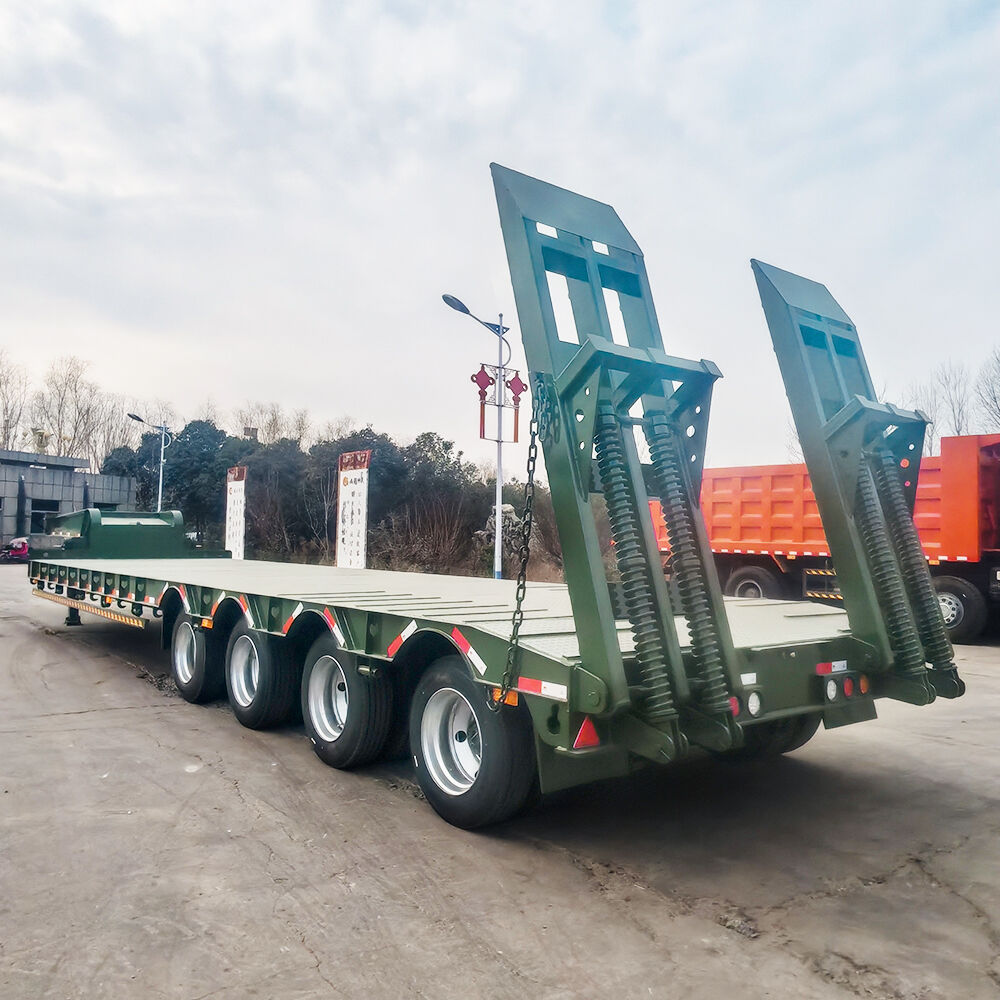
Die vervoer van swaar masjinerie vereis 'n lae-laaiwaentjie wat presies afgestem is op jou las se gewig, hoogte en grondvryheidvereistes. Vaste-nekwaentjies bied eenvoud en koste-effektiwiteit vir herhaalde vervoer van toerusting onder 60 ton—maar hul vaste gansnek veroorsaak 'n steiler laaihoek en beperk die onderstelvryheid. Verwyderbare-gansnek (RGN)-waentjies verwyder hierdie beperking: deur die nek te verwyder, stel dit reguit-inrylaai sonder rampleë moontlik—ideaal vir lae-vryheidkruipers, graafmasjiene en spoor-toerusting. Dubbel-afval-laaiwaentjies voeg 'n tweede dekafval by om die massamiddelpunt verdere te verlaag en lasse tot 12 voet hoog te akkommodeer, soos groot buldozere of primêre brekers. Al verbeter hierdie dieper bak die stabiliteit, verminder dit die buikvryheid—wat noukeurige roetebeplanning rondom stewwe opritte, spoedvertragingborrels of ongelyke terrein vereis. Die optimale keuse hang af van konsekwente lasafmetings, frekwensie van lasveranderinge en werf-spesifieke toegangsvoorwaardes.
Meganiese teenoor Hidrouliese Instelbaarheid: Impak op Laai-Effektiwiteit en Onderhoudskoste
Instelbaarheid beïnvloed direk die bedryfspoed, veiligheid en langtermyn-vloot-ekonomie. Meganiese stelsels maak staat op handmatige pene en skroefverbindings om rante of asse te herposisioneer. Hulle het laer aanvanklike koste en eenvoudiger herstelprosesse — maar vereis meer arbeid en tyd per laaikring. Hidrouliese stelsels, daarenteen, stel verrebeheerde kanteling, neerlaat en asverspreiding moontlik, wat die gemiddelde laaityd met 15–25 minute per rit verminder. Alhoewel hidrouliese eenhede 'n hoër aanvanklike belegging verg en gespesialiseerde diagnostiek vir seal- of klepversakinge vereis, herwin vloote wat verskeie kere daagliks laai gewoonlik die ekstra koste binne die eerste jaar deur herstelde arbeidsure en verhoogde batebenutting. Vir ongereelde of seisoenale vervoerders bly meganiese instelbaarheid 'n prudente balans van betroubaarheid, kostebeheer en veiligheid.
XL Gespesialiseerde Laagwaens: Wanneer Standaardkonfigurasies Nie Volstaan Vir Lasse van 120+ Ton Nie
Standaard multi-as laagplaatwaens bereik hul maksimum by ongeveer 80–100 ton—selfs met toestemming. Ladings wat 120 ton oorskry—soos mynbouklas-uitgrawers, kragtransformators of modulêre raffinaderi-komponente—vereis XL spesialiseerde laagplaatwaens. Hierdie eenhede beskik oor uitgebreide dekke (tot 55 voet), 6–8 asgroeperinge en versterkte raamrelse wat ontwerp is om ekstreme gewig te versprei terwyl dit binne die federale brugformule-grense bly. Baie integreer skuins of volledig hidrouliese nekke, wat kraanlose las van baie swaar toerusting moontlik maak. Vlootbestuurders wat XL-oplossings evalueer, moet nie net die brutoveertuiggewigklassifikasie (GVWR) bepaal nie, maar ook hoe die asafstand aan die Federale Brugformule voldoen oor die volle aanhangwaentjie-lengte. 'n Onder-spesifiseerde eenheid loop die risiko van oorgewigboetes, onveilige hantering of toestemmingsweiering—terwyl 'n behoorlik ontwerpte XL laagplaatwaen waarborg dat wetgewing nagekom word, strukturele integriteit bewaar word en betroubare prestasie verseker word teen die boonste grens van wettige vervoerkapasiteit.
Verseker Reguleringsnalewing vir Laebedryf van Trekkeraanhangwaens oor Noord-Amerika
V.S. DOT/FMCSA-vereistes: Asgewigbeperkings, Dekhoogte (≤24" grondvryheid) en Verligtingsstandaarde
ALLES laebedryf trekkeraanhangwaens werking in die VSA moet voldoen aan federale standaarde wat deur die Departement van Vervoer (DOT) en die Federale Motor Draer Veiligheidsadministrasie (FMCSA) bestuur word. Asse gewiglimiete beperk enkelasse tot 20 000 pond en dubbelasse tot 34 000 pond onder standaardomstandighede; oorgroot/oorgewig-permite kan tydelike uitsonderings toelaat. Die dekhoogte moet by of onder 24 duim vanaf die grond tot die dekoppervlak bly—’n kritieke drempel vir stabiliteit, lasveiligheid en veilige toerustinglading. Verligtingsvereistes vereis volledig funksionele voorskynligte, agterligte, rigtingswisselaars, remligte en reflektiewe band wat die volle lengte van albei kantkante van die sleepwa bedek. DOT-inspeksies verifieer reminstelling, bandtoestand, luglynintegriteit en FMCSA-nakomende vasbindinggebruik. Die integrasie van hierdie kontroles in verpligte voor-ry-inspeksies help om uit-dienstbevele, boetes en aanspreeklikheidsblootstelling te voorkom—veral tydens multi-staatrye waar die handhawingstrengheid wissel.
Kruisgrens-Opdrag: Kanada se CVSA Veiligheidsbeoordelings teenoor Meksiko se SCT-Toestemmings vir Laebedrywer Trekwaens
Kruisgrensbedrywighede bring jurisdiksie-spesifieke nakomingsvlakke in. In Kanada moet vervoerders 'n bevredigende veiligheidsklassifikasie van die Commercial Vehicle Safety Alliance (CVSA) handhaaf—wat tydens padkantinspeksies geverifieer word—om straf, inhegtenisneming of die weiering van toestemming te vermy. Vir toegang tot Meksiko is SCT (Secretaría de Comunicaciones y Transportes)-toestemmings vir oorgroot/oorgewig-ladings verpligtend vir nie-standaardladings, tesame met dokumentasie in Spaans, Mexikaanse aanspreeklikheidsversekering en die nakoming van aangewese roetes. Belangrike verskille—including asgewig-toelaes, verligtingskonfigurasies en remstandaarde—vereis proaktiewe aanpassing. Vlootbestuurders moet toestemmings vooraf bekom, hul CVSA-status bevestig en bestuurders oplei oor landspesifieke inspeksieprotokolle en dokumentasiewerkvloeie. Die sameWERKING met grens-gesertifiseerde makelaars en plaaslike owerhede vereenvoudig vervoer terwyl nakoming oor die Noord-Amerikaanse korridor behou word.
Optimaliseer die Totale Besitkoste vir U Laagbed- Trekkeraanhangwa- Vloot
Staal teenoor Aluminiumdekke: Lewensiklus ROI-analise oor ’n 7-jaar-vlootimplementering
Die keuse van dekmaterialie beïnvloed die langtermyn-vloot-ekonomie dramaties—nie net die aankoopprys nie. Staaldekke het 'n 15–20% laer aanvanklike koste en weerstaan baie goed skurwend, hoë-impak-laaistelle. Maar hul bykomende massa verminder die wettige laaikapasiteit, wat direk die inkomste per rit verminder. Oor sewe jaar vermeerder selfs 'n beskeie verlies in laaikapasiteit tot duisende rande verlore verdienste—veral op roetes met hoë frekwensie. Aluminiumdekke weeg ongeveer 40% minder, wat die toelaatbare laaikapasiteit verhoog en brandstofdoeltreffendheid verbeter. Hul natuurlike korrosiebestandheid verleng die dienslewe en verminder onderhoud—geen roesverhinderende bedekkings of lasreparasies word benodig nie. Vir 'n vloot wat gemiddeld 100 ritte per jaar maak, word aluminium se hoër aankoopkoste gewoonlik binne drie tot vier jaar gekompenseer deur groter laaikapasiteit-verdienste en verminderde stilstandtyd. Die onderstaande tabel som die sleutel lewensiklus-kompromisse op:
| Faktor | Staaldek | Aluminium dek |
|---|---|---|
| Aanvanklike Koste | Laer | Hoër |
| Gewig per as | Swaar (verminder laaikapasiteit) | Ligter (verhoog laaikapasiteit) |
| Korrosiebestandheid | Matig (vereis bedekkings) | Hoog (natuurlike oksidasie-laag) |
| Tipiese lewensduur | 5–7 jaar (met sorg) | 7–10 jaar |
| Onderhoudsfrekwensie | Hoër (roes, laslasreparasies) | Laer (minimale korrosie) |
| 7-Jaar Totale Koste | Matig (laer verkrygingskoste, hoër bedryfskoste) | Laer algeheel (hoër verkrygingskoste, laer bedryfskoste) |
Telematika-Klaar Laebedryf Trekwaens: Hoe Las-Opvoer-Akse en Modulêre Hidroulies Downtime Verminder
Telematika-geïntegreerde laagwaens transformeer onderhoud van reaktief na voorspellend—wat direk onbeplande stilstand verminder. Laai-sensitiewe asse stuur voortdurend gewigsdata in werklike tyd na vlootbestuurplatforms, wat onbalanse of oorladinge aanmerk voordat spanning op die ophanging tot mislukking lei. Modulêre hidroulies—gebou met patroonkleppe en vinnige-konneksie-aansluitings—stel velddiens tegnici in staat om verslete komponente binne minute eerder as ure te vervang. Saam verminder hierdie eienskappe onbeplande onderhoudgeleenthede met tot 30%, volgens vlootverwysingsstudies wat deur die American Trucking Associations uitgevoer is. Oor ‘n sewejaar-deployment vertaal daardie betroubaarheid na meer faktureerbare kilometers, minder padkantbrekings en meetbare TCO-vermindering—veral waardevol vir tyd-gevoelige swaar toerustinglewes waar vertragings kontraktuele boetes of kliënteskalerings veroorsaak.
VEE
Wat is die hoofvoordeel van ‘n dubbel-afval-laagwaensaanhangwaentjie?
‘n Dubbelafval-laagwaentrekker het ‘n addisionele dekafval wat die swaartepunt verlaag en hoër ladings, tot 12 voet, toelaat. Dit het egter verminderde onderste-ruimte, wat noukeurige roetebeplanning vereis.
Hoe verbeter hidrouliese stelsels laai-effektiwiteit in vergelyking met meganiese stelsels?
Hidrouliese stelsels maak afstandbeheerde aanpassings moontlik en verminder laaityd met 15–25 minute per rit. Hulle is ideaal vir vlootte met gereelde daaglikse laaiings, al vereis hulle gespesialiseerde diagnostiek en het hulle hoër aanvanklike koste.
Wat is die verskil tussen CVSA-veiligheidsgraderings en SCT-toestemmings?
CVSA-graderings is Kanada se nakomingsstandaarde wat op voertuigveiligheid fokus, terwyl SCT-toestemmings vereis word vir nie-standaardladings wat Meksiko binnekom. SCT-toestemmings tree op die asgewig, verligting, remstelsels en dokumentasievereistes in.
Wat is die voordele van die keuse van aluminiumdekke bo staal?
Aluminiumdekke is ligter, wat die lasvermoë en brandstofdoeltreffendheid verhoog. Hulle weerstaan natuurlike korrosie, wat tot minder onderhoud en 'n langer lewensduur lei, en bied gewoonlik 'n beter terugslag op belegging oor 'n 7-jaar-deployment, ten spyte van hoër aanvanklike koste.
Hoe verbeter telematika vlootonderhoud?
Telematika gebruik las-sensitiewe asse en modulêre hidroulies om werklike tydsdata te verskaf wat potensiële probleme voor kantel-aanvalle op die pad aandui. Hierdie voorspellende onderhoud verminder stilstandtyd en verbeter faktureerbare kilometer.
Tabel van inhoud
- Pas Tipes Lae Laaibakke aan Jou Kernladingprofiel aan
- Verseker Reguleringsnalewing vir Laebedryf van Trekkeraanhangwaens oor Noord-Amerika
- Optimaliseer die Totale Besitkoste vir U Laagbed- Trekkeraanhangwa- Vloot
-
VEE
- Wat is die hoofvoordeel van ‘n dubbel-afval-laagwaensaanhangwaentjie?
- Hoe verbeter hidrouliese stelsels laai-effektiwiteit in vergelyking met meganiese stelsels?
- Wat is die verskil tussen CVSA-veiligheidsgraderings en SCT-toestemmings?
- Wat is die voordele van die keuse van aluminiumdekke bo staal?
- Hoe verbeter telematika vlootonderhoud?